
Process Guide
How Coffin Handles Are Made
The production route for funeral hardware: zamak die casting, hand polishing and electroplating for metal, injection moulding and vacuum metallizing for plastic.
Written by the production team at Virtue Hardware Co., Ltd, Wenzhou.
Overview
Two Production Routes Under One Roof
Everything we make follows one of two routes. Metal parts are die cast, hand polished and electroplated. Plastic parts are injection moulded, vacuum metallized and colour coated. Both routes run in the same building in Wenzhou, which is why a metal handle and a plastic ornament on the same coffin can be matched to each other.
Metal Route
Die Casting Polishing And Electroplating
Zamak #3 ingot is melted and die cast. The die is ours, cut and trialled in our own mould workshop, which is the part of the business we invested in before the factory existed.
Castings come off the machine with a parting line and gate that have to be removed, then go to the polishing bench. Polishing is done by hand. It is slow and it is the step most often skipped by cheaper suppliers, and it is also the step you can see afterwards, because electroplating follows the surface underneath it rather than covering it.
Plated finishes include gold (GP), nickel (NP), antique brass (AB), antique copper (AC) and chrome. After plating, load bearing models go to the lift weight rig before they are assembled with bars, caps and screws and packed.
Plastic Route
Injection Moulding And Vacuum Metallizing
ABS or PP is injection moulded to the mould form. For reinforced handles a steel bar or steel wire is placed so that the steel carries the load and the moulding carries the appearance.
The moulded part then goes through vacuum metallizing, where a metal layer is deposited under vacuum, followed by colour coating to reach a gold, silver, copper or bronze tone. Some ABS parts can also be taken to antique brass or antique copper.
Quality Gates
Where The Line Stops And Checks
- Incoming material is checked before it enters the casting or moulding cell
- Castings and mouldings are inspected in process, not only at the end
- Plating and coating tone is compared against the approved reference sample
- Load bearing models are tested on our lift weight rig
- Count and pack are verified before the carton is closed
Doing the inspection in process rather than at the end is deliberate. A plating tone that has drifted is recoverable if it is caught at the plating line and expensive if it is caught on the packing bench.
Lead Time
What The 30 Days Actually Covers
A typical lead time of 30 days after order confirmation covers material, casting or moulding, polishing, finishing, testing, assembly and packing. Some references run 35 to 45 days depending on the plating batch and the assembly work involved. We do hold stock on some items, so if the date matters, ask before you assume the full lead time.
Related Products
Ranges Covered By This Guide
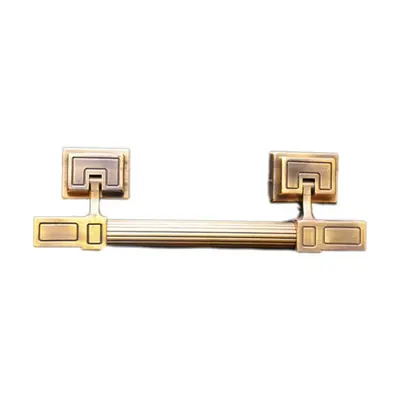 Metal Handle
94 references
Metal Handle
94 references
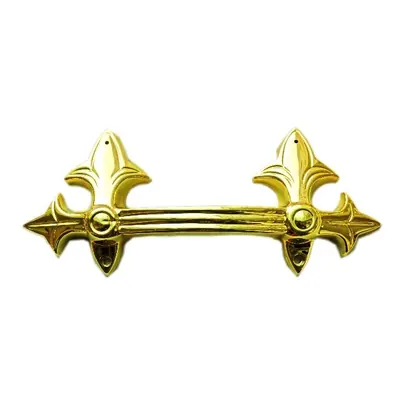 Plastic Handle
41 references
Plastic Handle
41 references
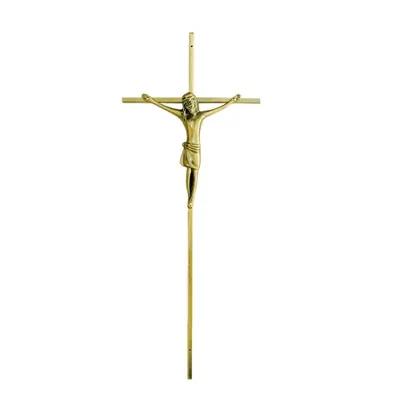 Metal Crucifix & Fittings
56 references
Metal Crucifix & Fittings
56 references
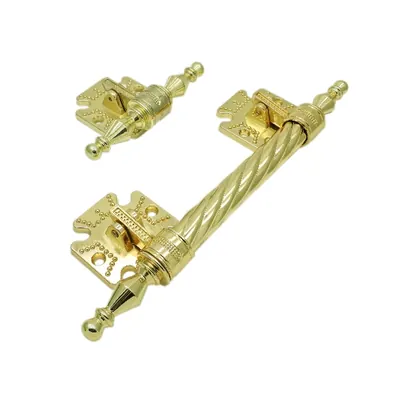 Handle Set
12 references
Handle Set
12 referencesTake the catalogue with you
Range catalogues with images and specifications, as PDFs.
More Guides
Related Reading
Material Guide
Coffin Hardware Materials Compared
Design Guide
Choosing A Finish For Coffin Hardware
Buying Guide
How To Choose Coffin Handles
Troubleshooting Guide
Lift Weight Testing And What The Rating Means
Installation Guide
Fitting Coffin Handles And Decoration
Comparison Guide
Metal Or Plastic Coffin Fittings
Questions
Questions About This Topic
Do you cast in house or subcontract?
Why does hand polishing matter?
How long does production take?
What is vacuum metallizing?
Next Step
Still Not Sure Which Reference To Order
Send a photograph of what you are trying to match, or tell us what the coffin has to do. A technical answer is usually faster than another article.
WhatsApp +86 138 1154 0649 · [email protected] · +86-316-5997244